

Grief Support
Supporting Young Children
Helping young children understand a death
Young children process grief differently than adults. Their understanding of death develops gradually, and their grief often appears in small, unpredictable bursts.
They might ask a heartbreaking question one minute and happily play with their toys the next. This is how they protect themselves from feelings that are too big to hold all at once.
What You May Be Feeling
A child's age and development shape what they understand and how they show their feelings.
- Ages 2-4: Toddlers do not understand that death is permanent. They may repeatedly ask when the person is coming back, and they often react to the emotional distress of the adults around them.
- Ages 5-7: Children at this age often engage in "magical thinking," believing their thoughts or actions can influence the world. They may secretly worry that being angry or misbehaving caused the death.
- Concrete understanding: Euphemisms like "passed away," "went to sleep," or "we lost him" are confusing to young children. They might fear going to sleep or think they can simply go "find" the person.
- Behavioral expression: Children often cannot articulate their grief. It may show up as regressions (bedwetting, clinginess), physical complaints (tummy aches), or sudden aggression.
Things That May Help
- Use clear, simple language: Gently but clearly use words like "died" and explain that it means the person's body stopped working and they cannot come back.
- Maintain routines: Familiar routines provide a sense of safety. Keep mealtimes, bedtimes, and school schedules as consistent as possible.
- Draw their feelings: Provide crayons and ask them to draw what their sadness or anger looks like.
- Create a memory jar: Help them write or draw favorite memories of the person on slips of paper and put them in a special jar to read when they miss them.
- Answer questions patiently: You may have to answer the same questions repeatedly. Answer them simply and consistently each time, providing reassurance that they are loved and cared for.
Questions Families Often Ask
Books & Guides for Families
These selections offer clear language, thoughtful activities, and practical ways to support yourself or someone you love.
After a Death: An Activity Book for Children
Drawing and writing activities that help children remember the person who died and find ways to live with the loss.
View at Dougy CenterA Kids Book About Grief
A family conversation starter that gives children words for the many ways grief can affect everyday life.
View at Dougy Center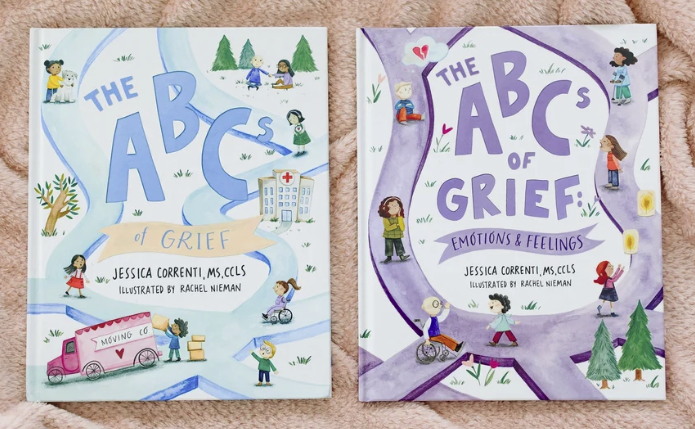
The ABCs of Grief
The ABCs of Grief and The ABCs of Grief: Emotions & Feelings by Jessica Correnti, MS, CCLS, help children name feelings and talk with caring adults.
Buy copies of these booksWhen a sibling dies
Clear words, reassurance, memory ideas, and signs that a grieving child may need more help.
Open family guideWhen a grandparent dies
Suggestions for telling a child, sharing feelings as a family, and helping them feel safe.
Open family guideWhen a pet dies
Simple, honest language for what may be a child's first experience with death and grief.
Open family guideGrief before an expected death
Ways to answer questions, make meaningful moments, and help a child feel less alone when someone is seriously ill.
Open family guideChildren’s Grief Support with Jessica Correnti

Jessica Correnti, CCLS
Certified Child Life Specialist
Jessica has extensive experience supporting bereaved children through her work as a Certified Child Life Specialist at several children’s hospitals. She regularly facilitates children’s grief support groups at our funeral home and works closely with Sol Levinson to ensure our resources meet families’ needs and are appropriate for children’s ages and stages of development.
To learn more about the children’s grief support groups Jessica leads here, please call us at 410-653-8900.
When More Support May Help
Consider seeking a child life specialist or child counselor if you notice severe, persistent sleep disturbances, prolonged regressions, intense separation anxiety, or complete withdrawal from play.
This page is informed by and adapted from resources provided by the National Alliance for Children's Grief (NACG).
More support when you need it
Have questions about our resources or need help finding a bereavement group?
Community Partners
We Are Proud to Partner With